There is a profound, silent weight to a piece that has survived since the late 18th century. Dated 1796, this Scandinavian dowry trunk is more than storage; it is a structural relic from the Gustavian era. It embodies endurance —the rugged, heavy-timbered pine body and masterfully hand-forged ironwork stand in beautiful tension with the and the history of its 230-year journey across the Atlantic.
This piece is rugged, storied, irreplaceable Scandinavian history.
The Color Palette: Earth, Sky, and Protection
The Teal/Verdigris Base: This deep blue-green hue was incredibly popular in Continental Europe and Scandinavia. Symbolically, blue and green tones represented the sky, nature, and the preservation of life. On a practical level, these pigments were often derived from copper oxides or earth pigments mixed with oil or milk proteins, which naturally helped deter boring insects and rot, protecting the wood and the contents within.
The Iron-Oxide Red/Orange Bands: The vertical bands flanking the lock are painted in a classic brick-red or burnt-orange folk pigment. In European folklore, red was a powerful protective color used to ward off bad luck, fire, and evil spirits. Visually, it provides a sharp, rhythmic contrast to the cool teal, grounding the piece.
The Painted Motifs: Growth and Celebration
The Folk Baroque Scrollwork: The white calligraphy and scrolled linework flanking the lock are highly stylized. This energetic, free-flowing script mimics the high-style Baroque and Rococo tastes of the upper European courts but translated into a rustic vernacular. It represents celebration, elegance, and the marking of a major life milestone.
The Stylized Vines and Foliage: Look closely at the vertical red bands—they are intricately detailed with dark, flowing leaf and vine patterns. In folk art, the Tree of Life or continuous vine motif is one of the most prevalent symbols. It represents:
Fertility and Growth: Wishing the owner a fruitful life ahead.
Continuity and Lineage: Connecting the family's past generations to the future.
Prosperity: The flourishing of a new household.
The Metalwork: Strength and Security
The Scalloped Iron Trim: The hand-wrought iron straps along the edges of the lid aren't just structural; the scalloped or wavy edges add a decorative wave motif. Waves and repeating ridges often symbolized water, movement, or a safe journey—highly relevant if the chest was built to travel across regions or oceans.
The Prominent Escutcheon: The iron lock plate is shaped almost like a shield or an abstracted blossom. It draws the eye directly to the center of the trunk, emphasizing security and privacy—a visual reminder that the family's most sacred possessions (heirlooms, bridal linens, and deeds) were safely guarded within.
The Structural Layout: The Sacred Center
The division of the front into distinct panels separated by vertical bands is a classic architectural layout. By framing the central lock and date with these ornate columns, the painter turned the trunk into a miniature monument. It treated the trunk not as a mere box, but as an anchor piece for a home.
The Details:
Aesthetic: Original aged pine with a deep, honeyed patina that only centuries of oxidation can achieve.
Craftsmanship: Hand-wrought iron hinges and banding; original date-stamp (1796) and initials.
Design Utility: For the high-end designer, this serves as a definitive "anchor" for a room. In a storied living room or a grounding blanket chest at the foot of a Belgian linen-clad bed.
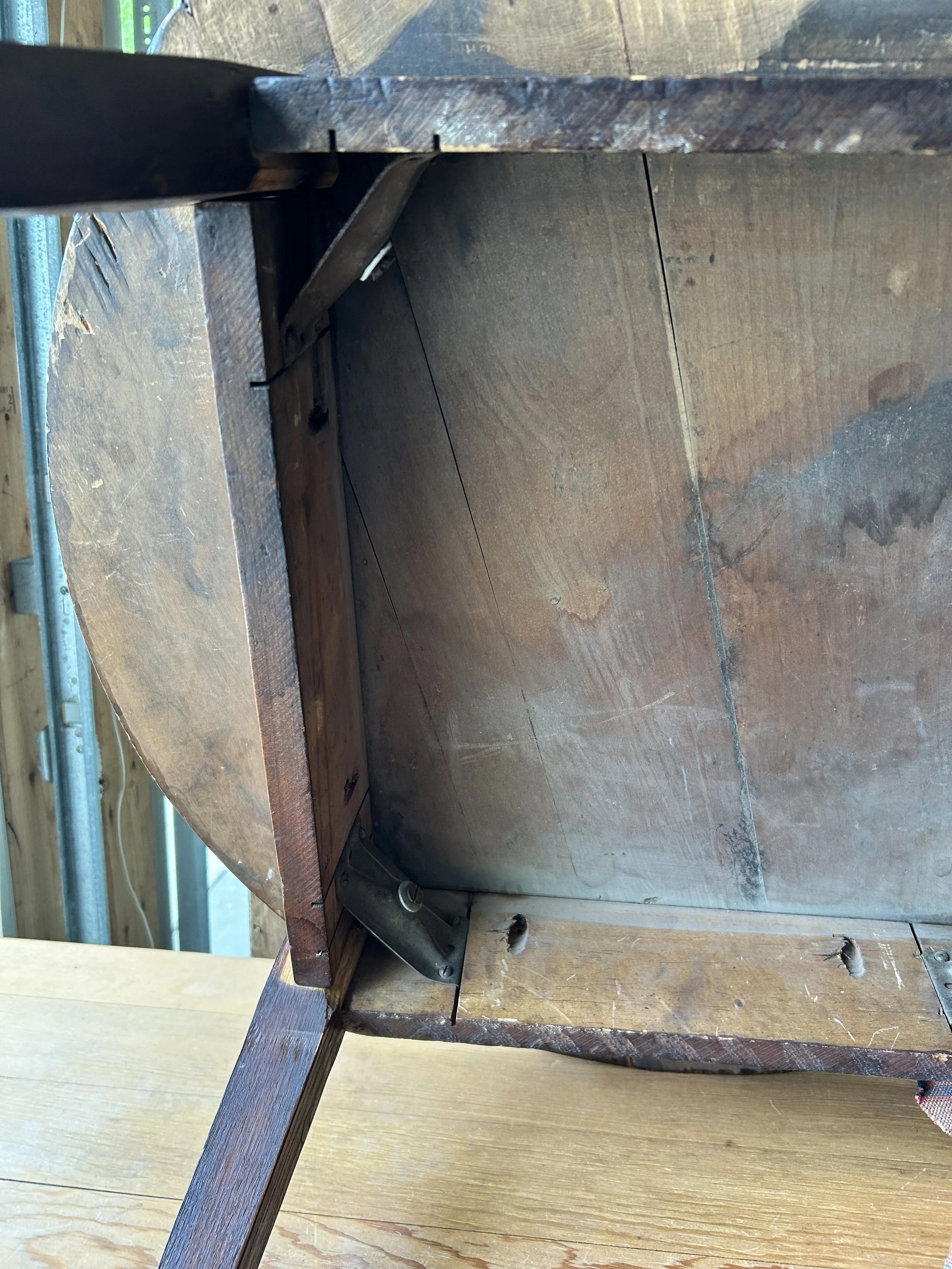
Condition: Structurally sound with the honest, weathered character expected of a maritime antique.
Dimensions: 48W x 22D x 30T
Location: Geneva, IL. Available for local Chicagoland procurement by delivery or at Trend + Relic St. Charles, IL.
There is a profound, silent weight to a piece that has survived since the late 18th century. Dated 1796, this Scandinavian dowry trunk is more than storage; it is a structural relic from the Gustavian era. It embodies endurance —the rugged, heavy-timbered pine body and masterfully hand-forged ironwork stand in beautiful tension with the and the history of its 230-year journey across the Atlantic.
This piece is rugged, storied, irreplaceable Scandinavian history.
The Color Palette: Earth, Sky, and Protection
The Teal/Verdigris Base: This deep blue-green hue was incredibly popular in Continental Europe and Scandinavia. Symbolically, blue and green tones represented the sky, nature, and the preservation of life. On a practical level, these pigments were often derived from copper oxides or earth pigments mixed with oil or milk proteins, which naturally helped deter boring insects and rot, protecting the wood and the contents within.
The Iron-Oxide Red/Orange Bands: The vertical bands flanking the lock are painted in a classic brick-red or burnt-orange folk pigment. In European folklore, red was a powerful protective color used to ward off bad luck, fire, and evil spirits. Visually, it provides a sharp, rhythmic contrast to the cool teal, grounding the piece.
The Painted Motifs: Growth and Celebration
The Folk Baroque Scrollwork: The white calligraphy and scrolled linework flanking the lock are highly stylized. This energetic, free-flowing script mimics the high-style Baroque and Rococo tastes of the upper European courts but translated into a rustic vernacular. It represents celebration, elegance, and the marking of a major life milestone.
The Stylized Vines and Foliage: Look closely at the vertical red bands—they are intricately detailed with dark, flowing leaf and vine patterns. In folk art, the Tree of Life or continuous vine motif is one of the most prevalent symbols. It represents:
Fertility and Growth: Wishing the owner a fruitful life ahead.
Continuity and Lineage: Connecting the family's past generations to the future.
Prosperity: The flourishing of a new household.
The Metalwork: Strength and Security
The Scalloped Iron Trim: The hand-wrought iron straps along the edges of the lid aren't just structural; the scalloped or wavy edges add a decorative wave motif. Waves and repeating ridges often symbolized water, movement, or a safe journey—highly relevant if the chest was built to travel across regions or oceans.
The Prominent Escutcheon: The iron lock plate is shaped almost like a shield or an abstracted blossom. It draws the eye directly to the center of the trunk, emphasizing security and privacy—a visual reminder that the family's most sacred possessions (heirlooms, bridal linens, and deeds) were safely guarded within.
The Structural Layout: The Sacred Center
The division of the front into distinct panels separated by vertical bands is a classic architectural layout. By framing the central lock and date with these ornate columns, the painter turned the trunk into a miniature monument. It treated the trunk not as a mere box, but as an anchor piece for a home.
The Details:
Aesthetic: Original aged pine with a deep, honeyed patina that only centuries of oxidation can achieve.
Craftsmanship: Hand-wrought iron hinges and banding; original date-stamp (1796) and initials.
Design Utility: For the high-end designer, this serves as a definitive "anchor" for a room. In a storied living room or a grounding blanket chest at the foot of a Belgian linen-clad bed.
Condition: Structurally sound with the honest, weathered character expected of a maritime antique.
Dimensions: 48W x 22D x 30T
Location: Geneva, IL. Available for local Chicagoland procurement by delivery or at Trend + Relic St. Charles, IL.
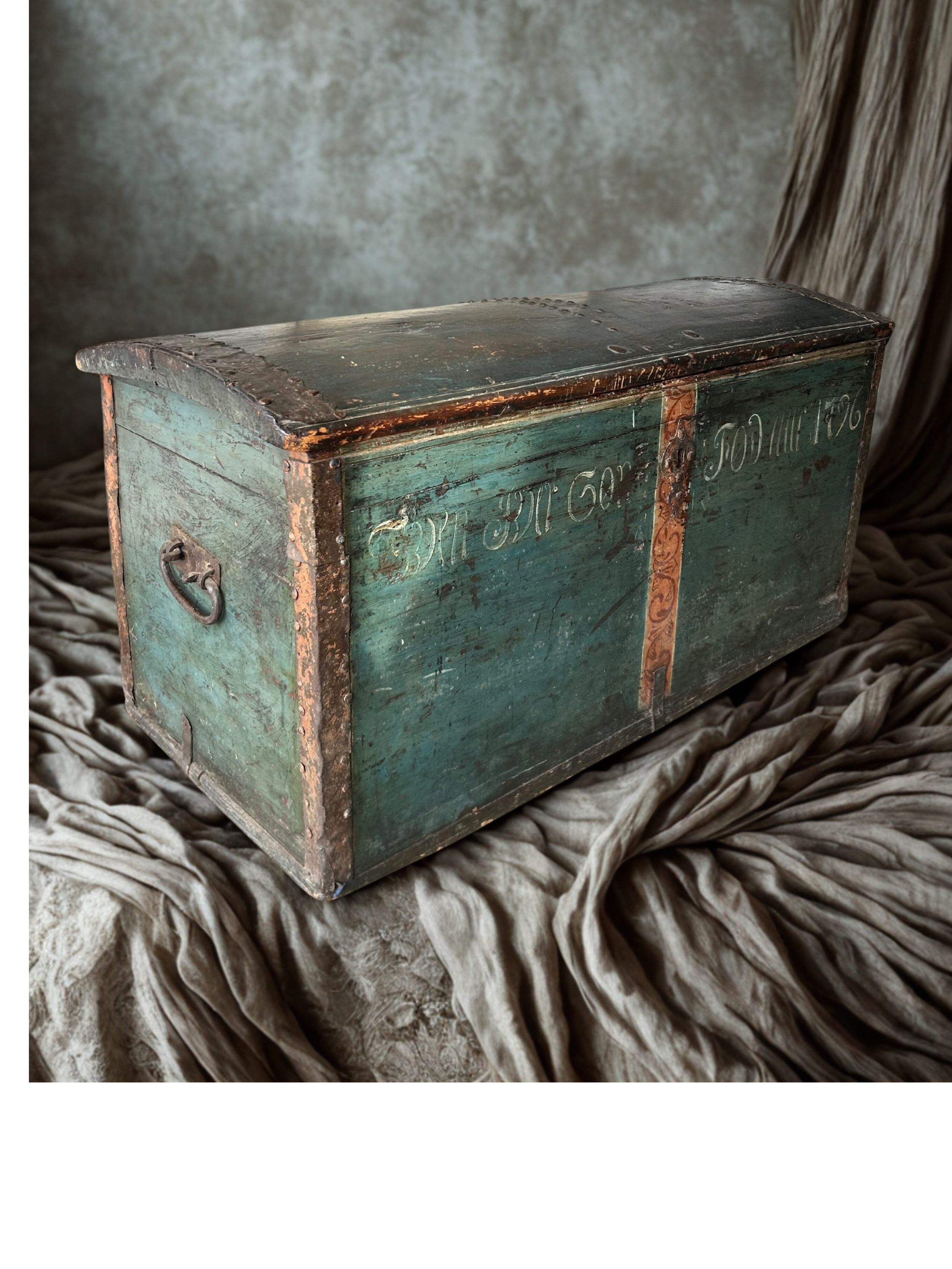 Image 1 of 9
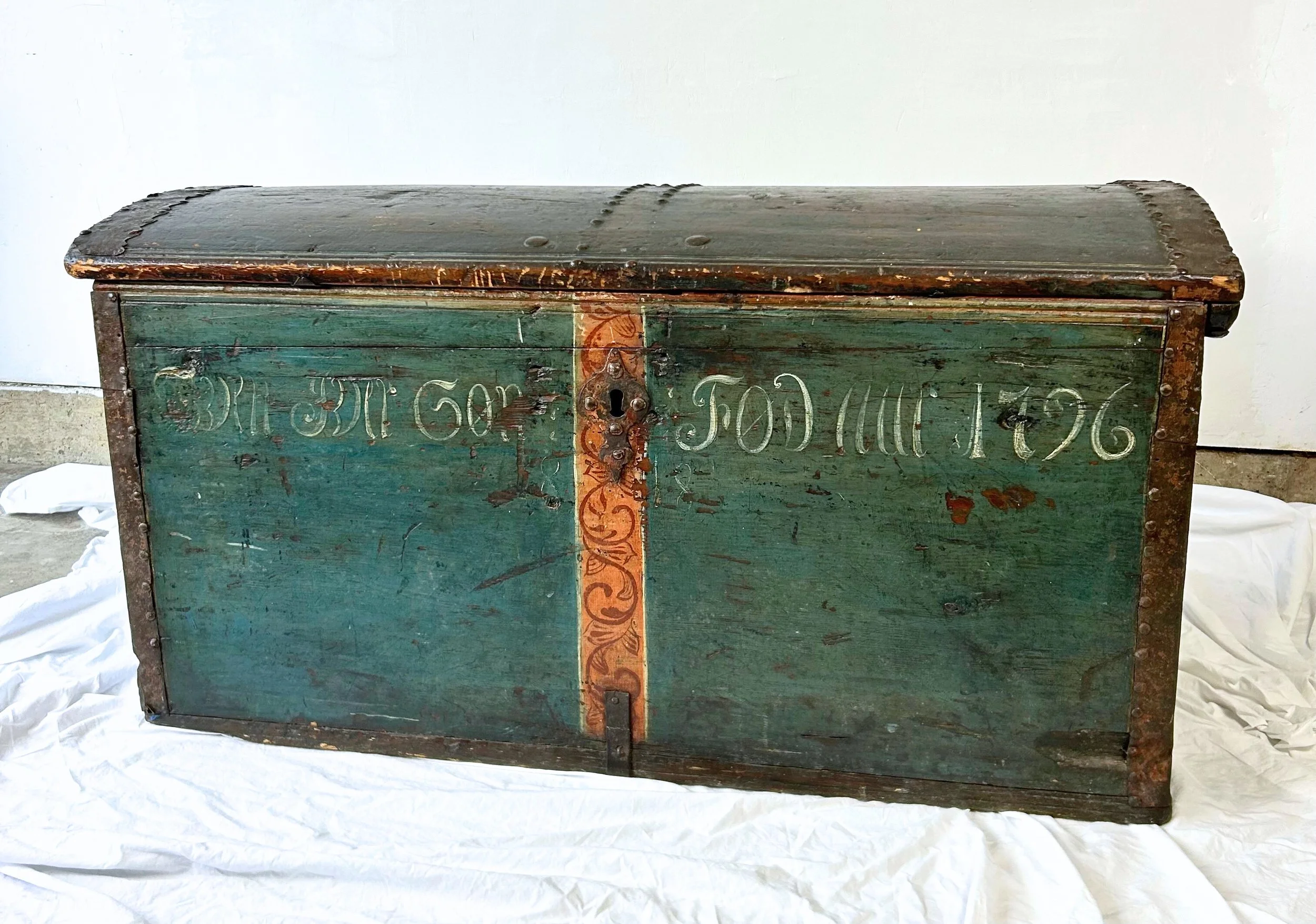 Image 2 of 9
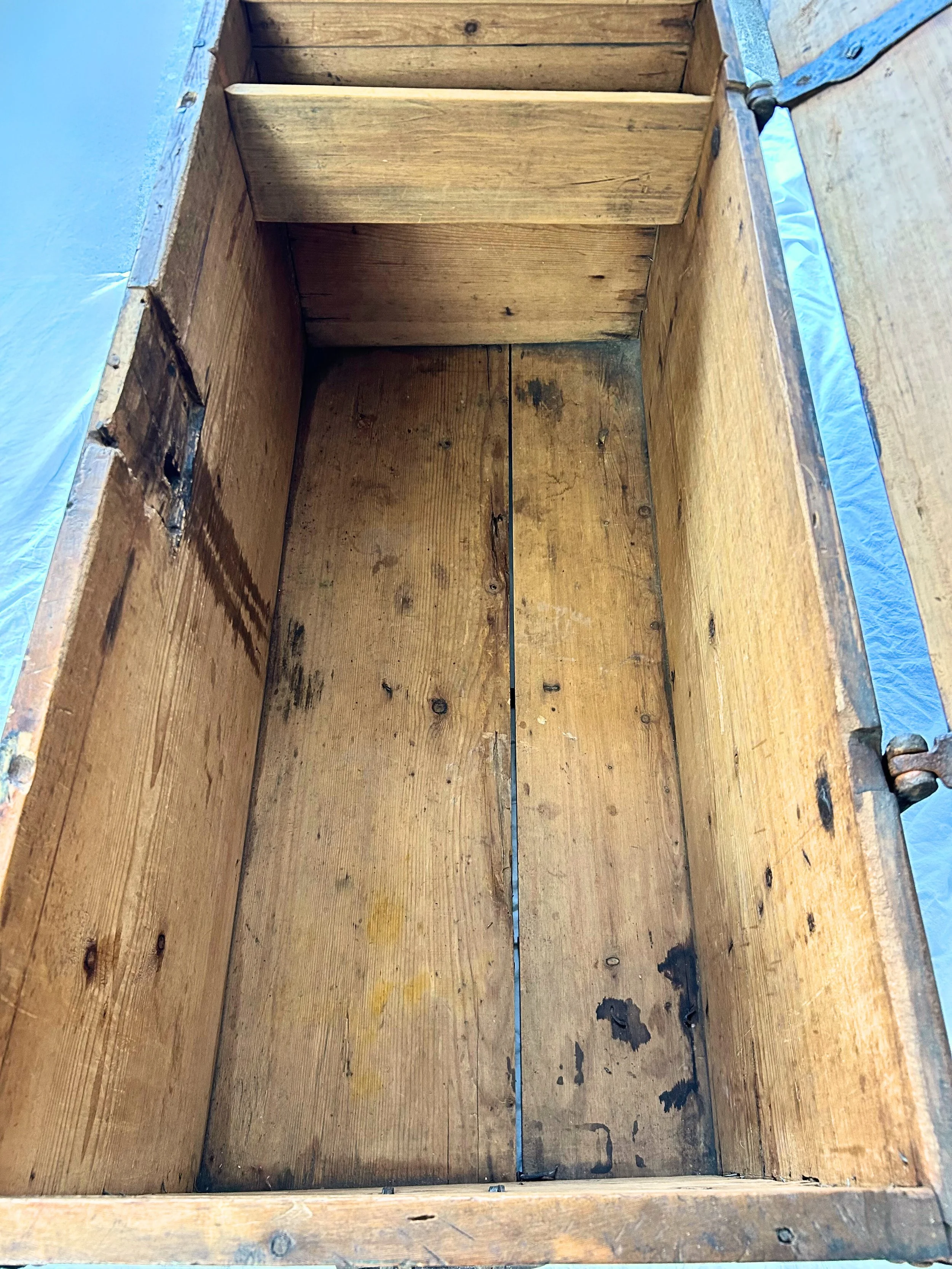 Image 3 of 9
 Image 4 of 9
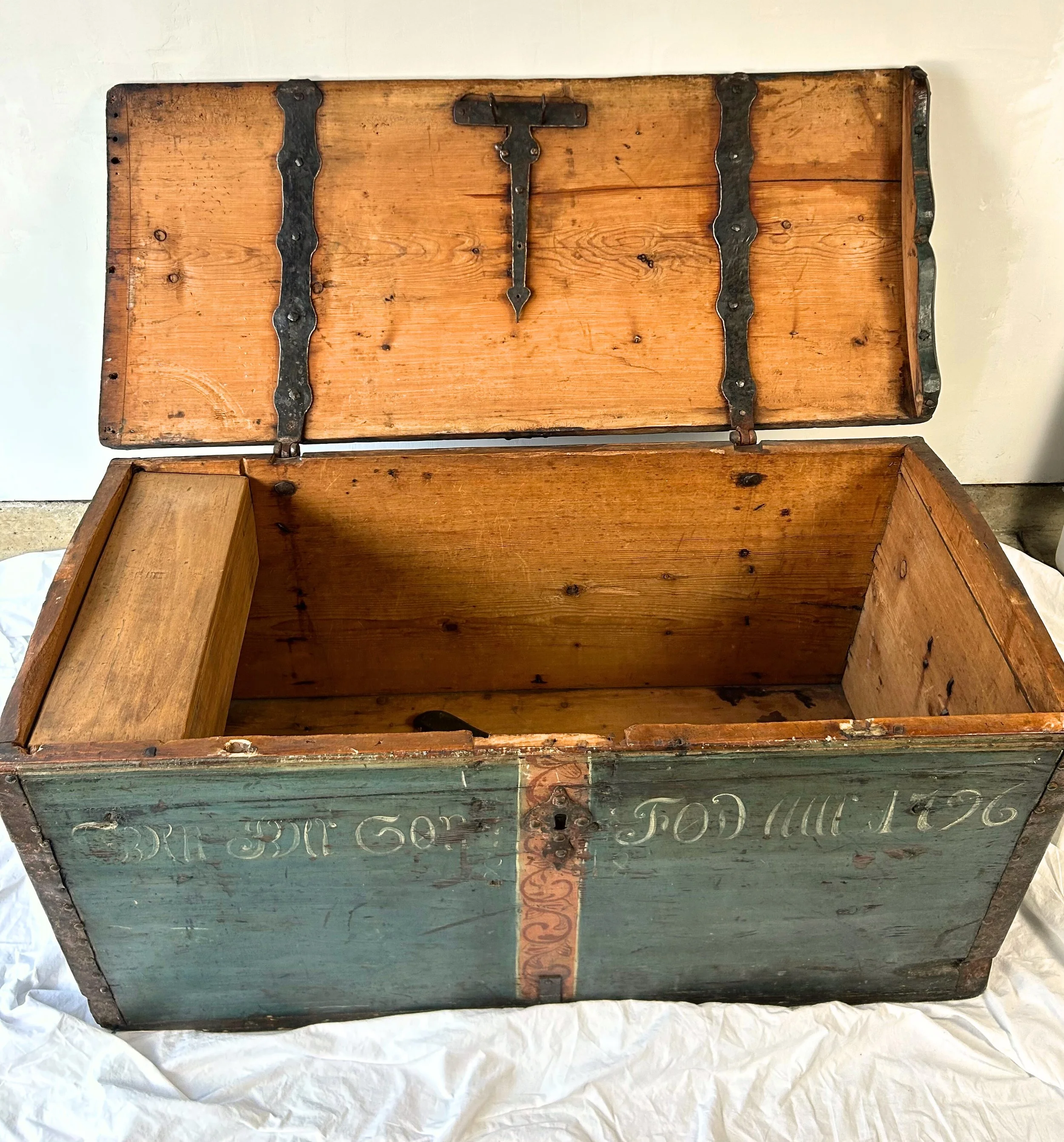 Image 5 of 9
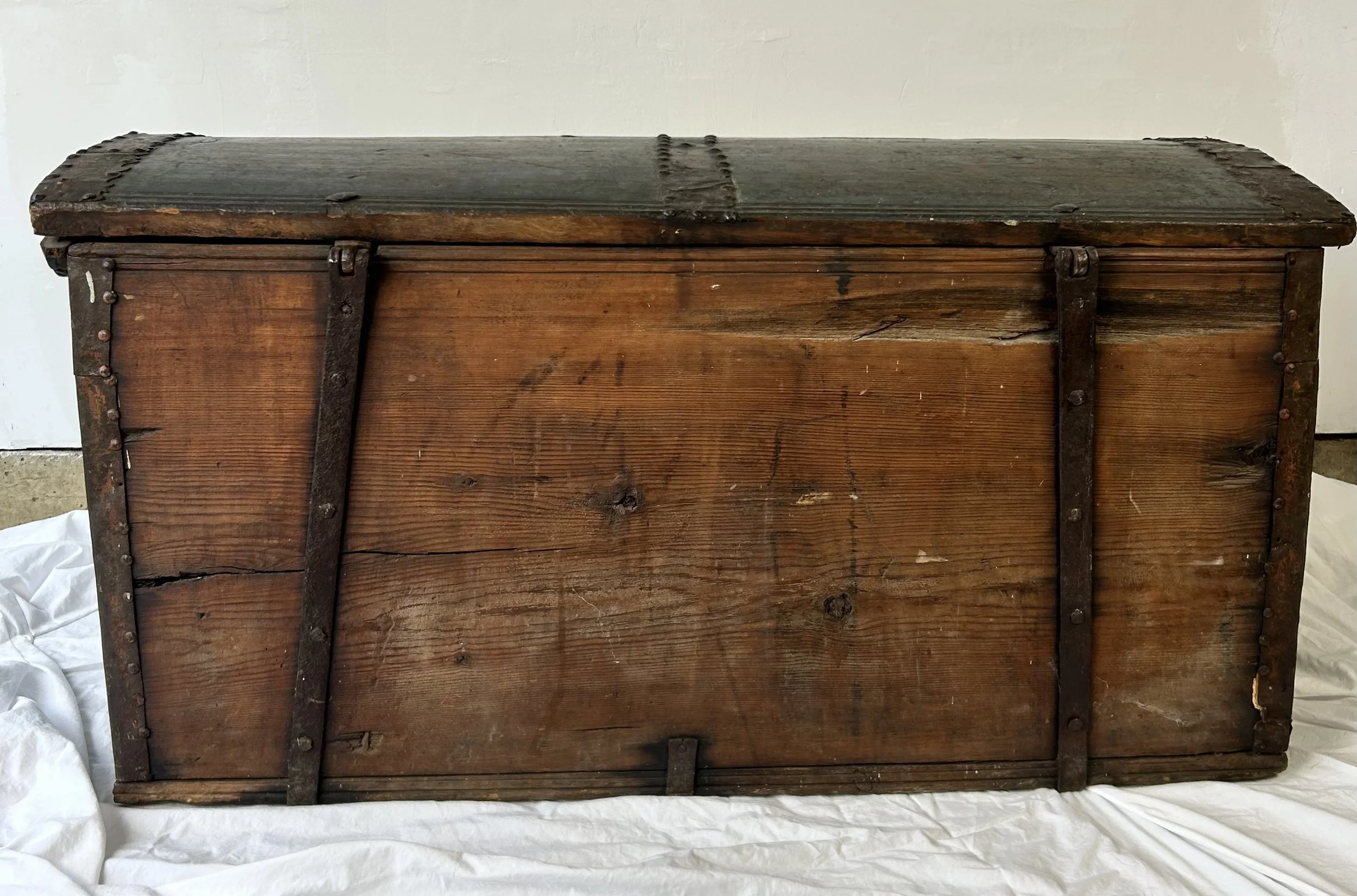 Image 6 of 9
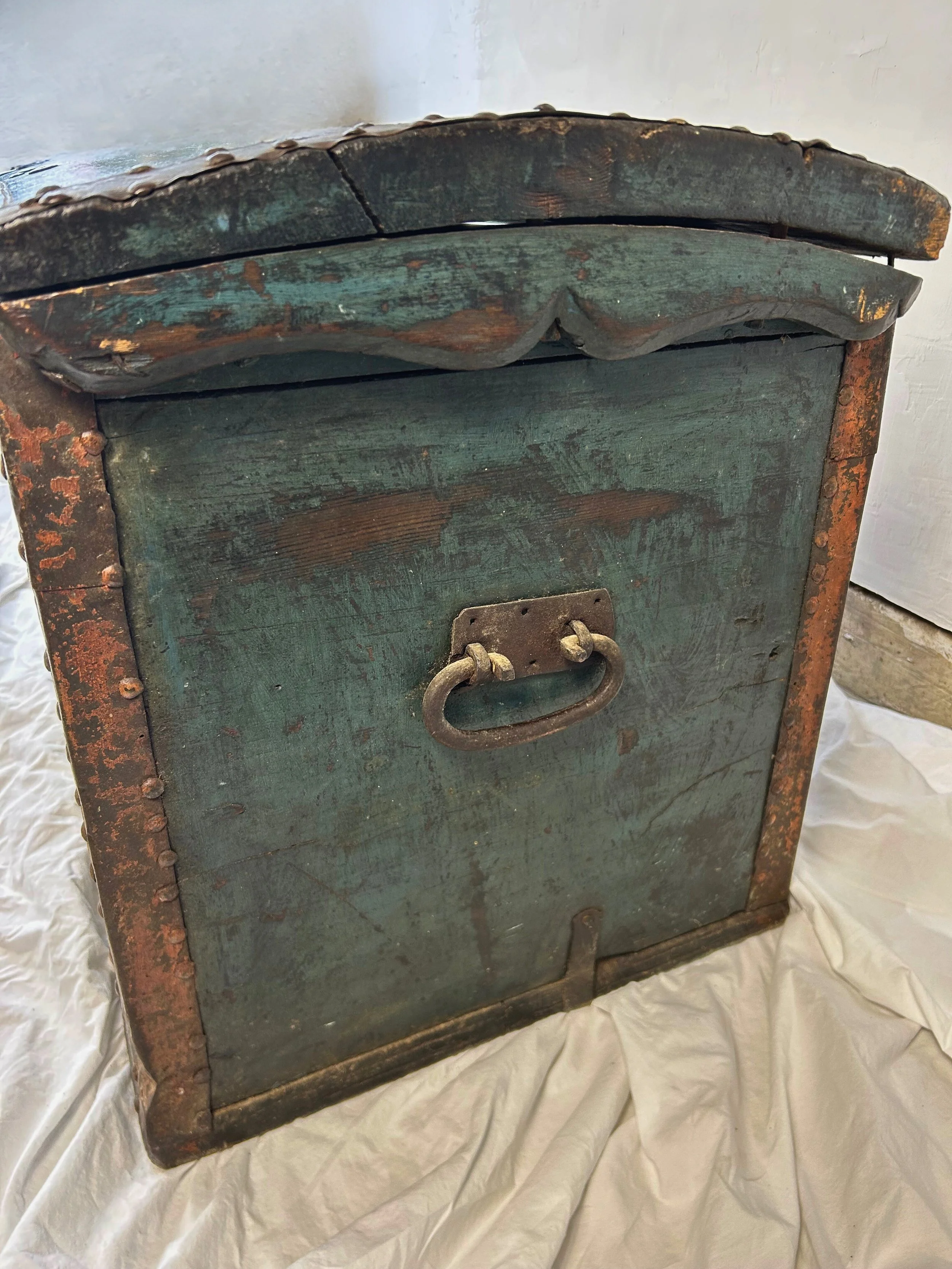 Image 7 of 9
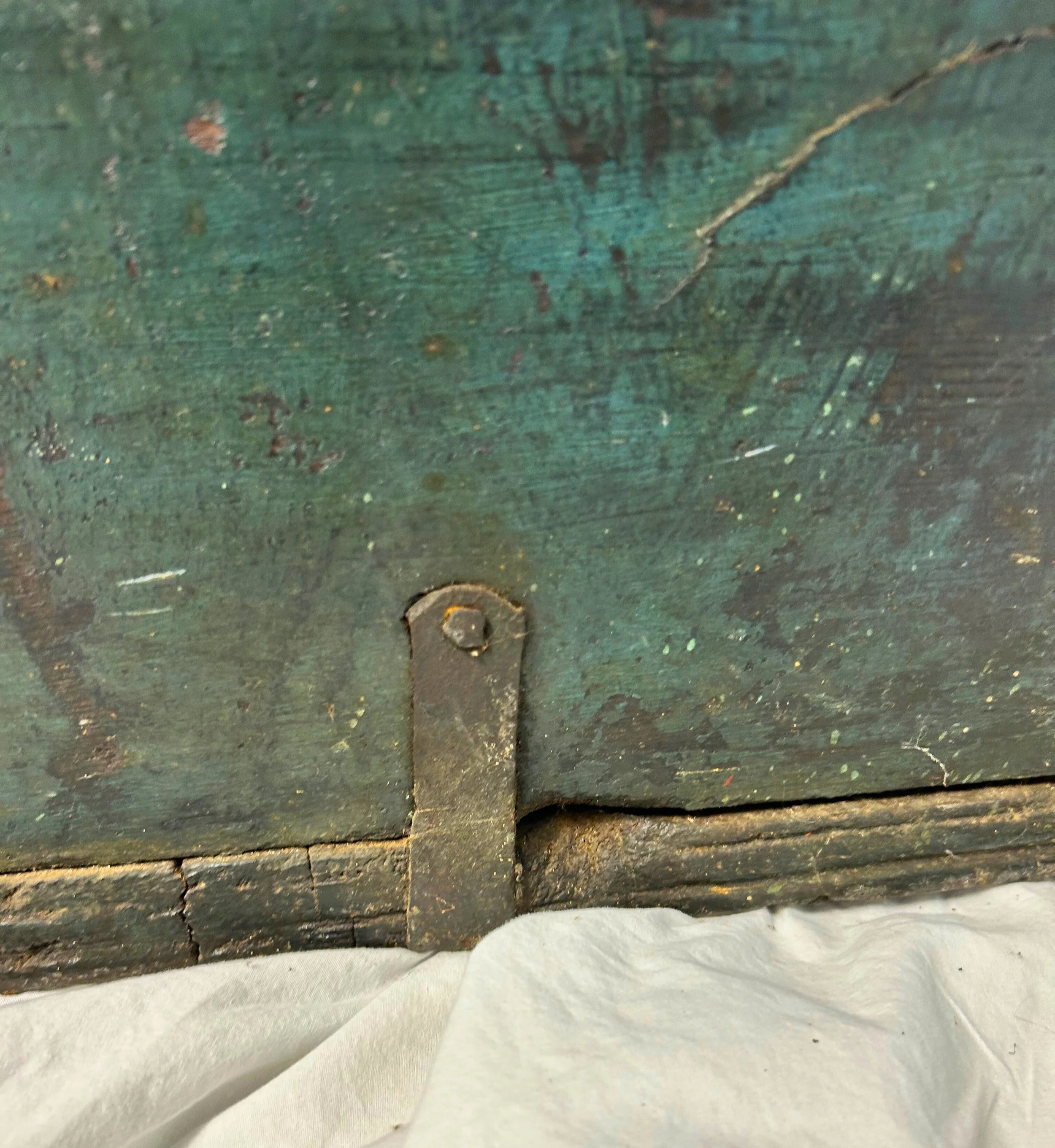 Image 8 of 9
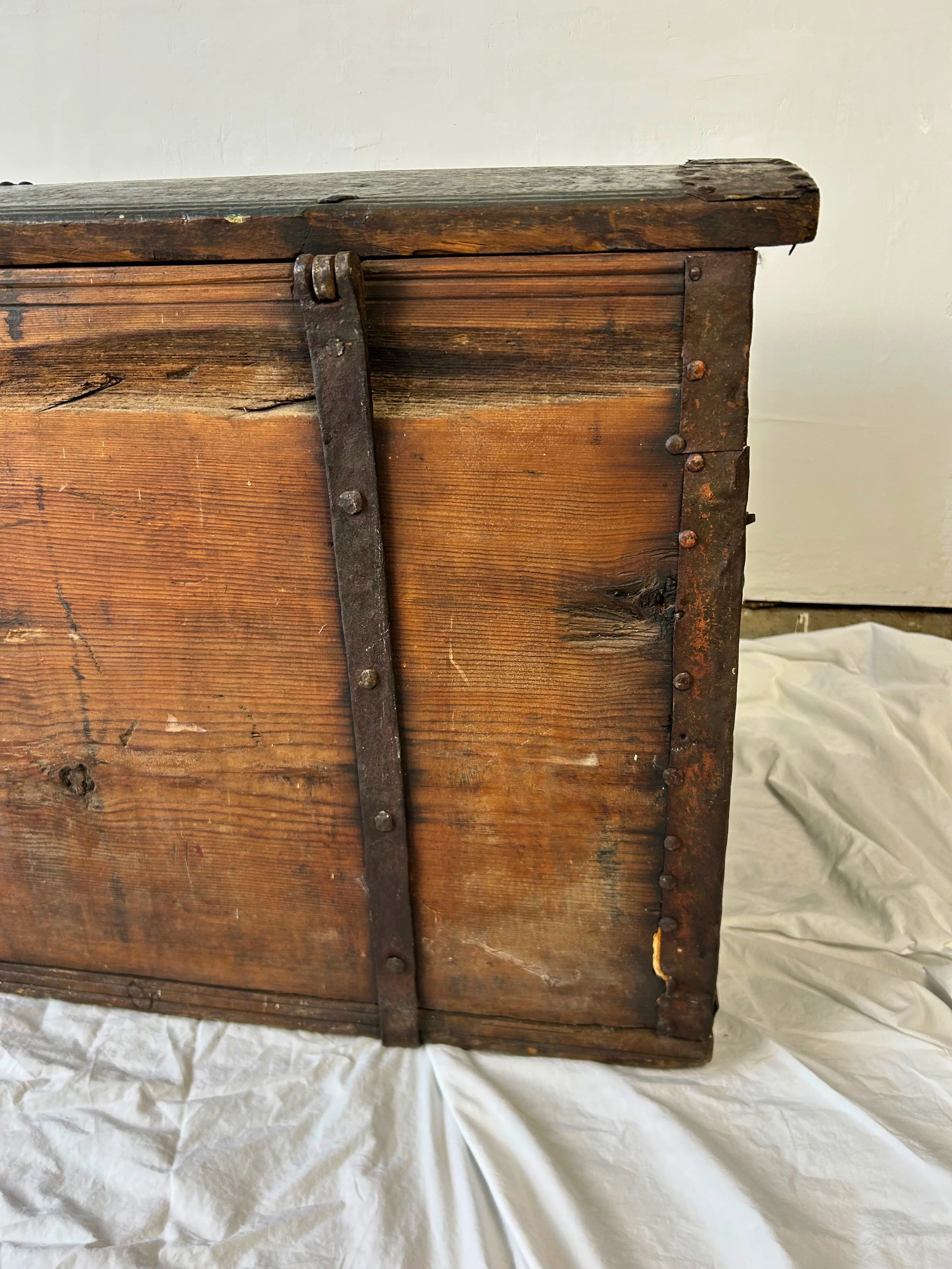 Image 9 of 9